
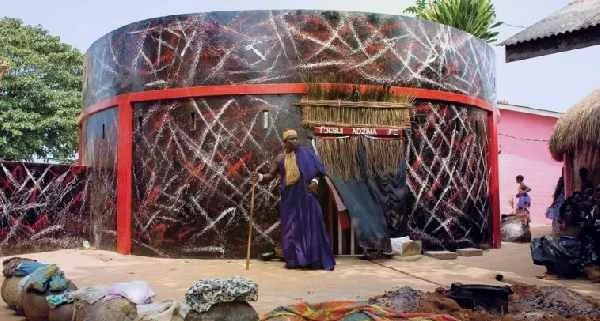
Mention Nogokpo anywhere in Ghana, and chances are you’ll hear a variety of stories. For some, it is a sacred town where people seek justice when conventional avenues have failed. Others know it as a place where traditional healing, spiritual consultation, and cultural practices have been preserved for generations.
Over the years, the Nogokpo Shrine in the Volta Region has become one of the most talked-about traditional shrines in Ghana. While many people have heard its name, very few understand what actually happens there or how traditional healing is believed to be carried out.
According to traditional leaders at the shrine, including Regent Torgbui Agbodzalu Amuzu, the deities worshipped at Nogokpo are believed to protect the innocent rather than punish them.
He has explained in several public interviews that, according to the shrine’s beliefs, innocent people are not harmed. Instead, any punishment is believed to be directed at those who deliberately commit wrongdoing and refuse to make amends.
Whether one accepts these beliefs or not often comes down to personal faith and cultural background. However, the shrine remains an important part of the traditional heritage of the Ewe people and the wider Volta Region.
What Happens During a Traditional Healing Consultation?
People visit the Nogokpo Shrine for different reasons. Some seek healing from illnesses they believe have spiritual causes, while others seek guidance, justice, protection, or answers to personal challenges.
According to practitioners at the shrine, the healing process begins with consultation through divination. The priest, commonly referred to as the Torgbui or traditional priest, seeks guidance from the deities before recommending any form of treatment.
The treatment may include herbal remedies, traditional rituals, or prescribed sacrifices depending on what the consultation is believed to reveal.
What is Divination?
Within the traditional belief system practiced at Nogokpo, divination is regarded as a way of seeking knowledge that is hidden from ordinary human understanding.
Practitioners believe it allows communication with spiritual beings in order to determine the cause of an illness, identify challenges affecting a person, or provide guidance about future decisions.
Different shrines across the Volta Region use different forms of divination.
Some priests perform water gazing, where they meditate while looking into water during spiritual consultation.
Others rely on spirit possession, where a specially prepared individual enters a trance and serves as a medium through whom messages are believed to be communicated.
Who is an Amegashie?
One of the unique aspects of traditional practice at Nogokpo is the role of the Amegashie.
According to the shrine’s tradition, an Amegashie is an individual believed to have been chosen by the deities to serve as a spiritual medium. During certain rituals, practitioners believe the individual may enter a trance and communicate messages intended for the priest.
The information received is believed to guide the priest in identifying appropriate herbs, rituals, or other traditional remedies.
Traditional belief holds that a person may become an Amegashie either because they have been specially chosen by the deities or because of certain spiritual circumstances surrounding their life.
Before assuming this role, the individual undergoes extensive traditional training and initiation. This period includes learning customs, observing strict rules, and participating in rituals that prepare them for their responsibilities within the shrine.
Understanding the Afa Oracle
At the heart of many traditional consultations in the Volta Region is the Afa Oracle.
Afa is an ancient system of divination practiced among the Ewe people. Those who practice it believe it enables communication with the spiritual world through symbols and sacred patterns interpreted by a trained priest.
The consultation usually begins with prayers or chants intended to invoke the deities.
The priest then uses sacred objects, including strands of beads, charms, and sometimes cowrie shells, during the divination process.
According to practitioners, beads are commonly used when consulting on behalf of a woman, while cowrie shells may be used for a man.
The arrangement of these objects is interpreted according to traditional knowledge that priests spend many years learning.
Many practitioners compare the complexity of Afa to learning an entirely new language because every symbol carries a specific meaning.
What Questions Can the Afa Oracle Address?
According to practitioners, people consult the Afa Oracle for many reasons.
These may include:
- Determining the perceived cause of an illness
- Seeking guidance before travelling
- Resolving family disputes
- Receiving advice on important life decisions
- Identifying traditional herbal remedies
- Seeking direction regarding business or marriage
- Asking about personal challenges
Within the traditional belief system, illnesses may be viewed as having either physical or spiritual causes. The divination process is believed to help distinguish between the two before any treatment is recommended.
It is important to note that these interpretations reflect traditional beliefs and are not supported by scientific or medical evidence.
Herbal Medicine at the Shrine
One aspect of Nogokpo that receives less public attention is its reliance on herbal medicine.
Traditional healers often prescribe herbs collected from forests and surrounding communities. These remedies have formed part of indigenous healthcare systems in Ghana long before the introduction of modern hospitals.
Many visitors who seek treatment at traditional shrines believe the combination of herbal knowledge and spiritual consultation contributes to healing. Others prefer conventional medical treatment, while some choose to combine both approaches.
Healthcare professionals generally encourage anyone with serious medical conditions to seek proper diagnosis and treatment from qualified medical practitioners.
Separating Myth from Reality
The Nogokpo Shrine has often been surrounded by rumours, sensational stories, and misconceptions, particularly on social media.
Many residents of the Volta Region argue that these stories exaggerate the purpose of the shrine.
According to local traditional leaders, Nogokpo is primarily a place for justice, healing, reconciliation, and preserving cultural heritage rather than harming innocent people.
Like many traditional institutions across Africa, beliefs about the shrine vary widely. Some people strongly believe in its spiritual significance, while others view it as an important cultural institution that reflects the history and traditions of the Ewe people.
Final Thoughts
The Nogokpo Shrine remains one of Ghana’s most fascinating traditional institutions. Whether viewed through the lens of culture, religion, history, or anthropology, it offers valuable insight into beliefs that have shaped communities in the Volta Region for centuries.
Ultimately, belief in traditional religion, Christianity, Islam, or any other faith remains a personal choice. Regardless of one’s beliefs, understanding the customs and traditions of others promotes respect and preserves Ghana’s rich cultural diversity.
For anyone interested in learning about indigenous African traditions, Nogokpo continues to be one of the country’s most recognised centres of traditional practice and cultural heritage.
Credit: Deladem