
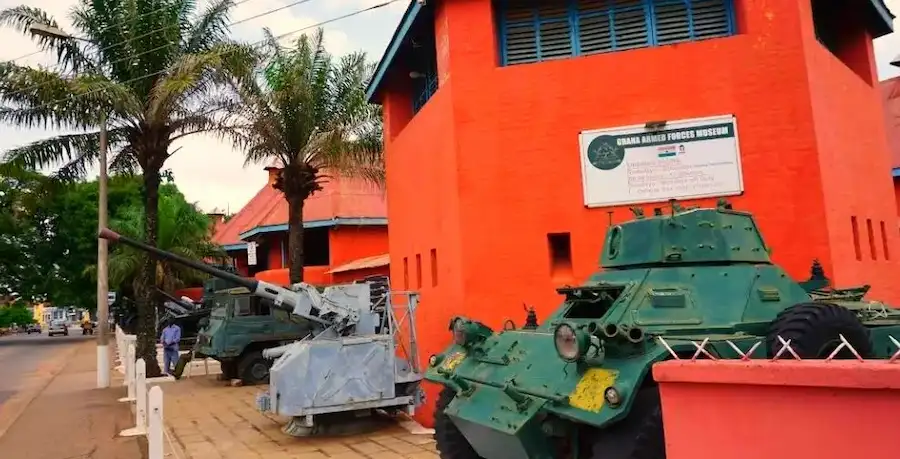
If you love history and enjoy visiting places that tell the story of Ghana’s past, then the Armed Forces Museum in Kumasi deserves a place on your travel list. Located inside the historic Kumasi Fort, the museum is one of Ghana’s most important military and cultural attractions.
The museum preserves centuries of military history, from the powerful Asante Kingdom and its resistance against British colonial rule to Ghana’s contribution to international peacekeeping missions.
Whether you are a student, researcher, tourist, or simply someone who appreciates Ghana’s rich heritage, a visit to the Armed Forces Museum offers an unforgettable experience.
Where is the Armed Forces Museum Located?
The Armed Forces Museum is located inside the historic Kumasi Fort at Uaddara Barracks in Kumasi, the capital of the Ashanti Region.
Its location makes it an excellent stop for tourists exploring Kumasi’s many attractions. While in the city, you can also visit the Prempeh II Jubilee Museum, Kumasi Cultural Centre, Kumasi Zoo, Manhyia Palace Museum, and the famous Kejetia Market.
Often referred to as the cultural capital of Ghana, Kumasi is known for its rich traditions, warm hospitality, and historical landmarks that attract visitors from across the world.
History of the Armed Forces Museum
The museum occupies the historic Kumasi Fort, a structure that has witnessed some of the most significant moments in Ghana’s history.
The original fort was constructed around 1820 by Asantehene Osei Tutu Kwamina to resemble the coastal forts built by European traders. During the Anglo Asante conflicts, the fort became an important military installation.
In 1874, British forces destroyed much of the fort during the Third Anglo Asante War. It was later rebuilt in 1897 using granite and brown earth transported from Cape Coast.
One of the fort’s most remarkable moments came in March 1900 during the War of the Golden Stool, also known as the Yaa Asantewaa War. British soldiers took refuge inside the fort while they were surrounded by Asante fighters led by the legendary Queen Mother of Ejisu, Yaa Asantewaa. The siege became one of the defining moments in Ghana’s resistance against colonial rule.
After the Second World War, the British colonial administration converted the fort into a military museum between 1952 and 1953. Since then, it has continued to preserve the military history of both the colonial period and modern Ghana.
What Can You Expect During a Tour?
A tour of the Armed Forces Museum is both educational and fascinating.
Knowledgeable tour guides walk visitors through different sections of the museum while explaining the historical significance of each exhibit. The museum tells the story of the Asante Kingdom, the Anglo Asante wars, colonial military operations, Ghana’s independence, and the evolution of the Ghana Armed Forces.
Visitors also learn about the Army, Navy, and Air Force, together with the important roles Ghanaian soldiers have played in peacekeeping missions across Africa and other parts of the world.
Photography is allowed in some sections, although visitors should always seek permission before taking pictures.
Artefacts and Exhibits at the Armed Forces Museum
The museum houses an impressive collection of military artefacts dating back several centuries.
Some of the exhibits include:

- Military uniforms from different periods
- Historic rifles, swords, pistols, and ammunition
- Armoured vehicles and anti-aircraft guns
- Military medals and decorations
- Battle maps and historical documents
- Portraits of distinguished military leaders
- Photographs from various military operations
- Regimental colours and ceremonial items
- Equipment used during the Anglo-Asante Wars
- Exhibits highlighting Ghana’s participation in United Nations peacekeeping missions
The museum also documents the transformation of the Gold Coast Regiment into today’s Ghana Armed Forces, making it an important educational resource for anyone interested in military history.
Ghana’s Peacekeeping Legacy
One section of the museum is dedicated to Ghana’s contribution to international peacekeeping operations.
Over the years, Ghanaian soldiers have served in several conflict zones under the United Nations and regional peacekeeping missions. Countries including Lebanon, Liberia, Sierra Leone, Rwanda, South Sudan, and the former Yugoslavia have benefited from the professionalism and commitment of Ghanaian peacekeepers.
This section pays tribute to the courage and sacrifice of the men and women who have represented Ghana across the globe.
Opening Hours and Entry Fee
The Armed Forces Museum is open from 8:00 am to 5:00 pm, Monday to Saturday.
The museum is usually closed on Sundays and public holidays, although opening hours may occasionally change during national events.
Entry fees are generally affordable. A guided tour typically costs GH¢10 – GH¢20 per person, though you are encouraged to confirm the latest charges before visiting, as fees may change over time.